sexta-feira, 23 de julho de 2010

Nantes II


The Place Graslin


I had a pretty much independent life in my days of Nantes. After waking up, I would take the trolley and go to college. I had lunch and dinner at the university´s restaurant. I walked through the city´s streets in the weekends, and visited museums.
But I also did a lot of things with Christian. He took me, one night, to see an Yves Duteil´s concert, one of the most celebrated French Singers. One saturday we went to a bar inside an old boat at the Loire River. Another weekend he drove me and some brazilian friends to the West Coast, to the cities of Guérande, Le Croisic, Batz-sur-Mer, Saint Nazaire and Pornic. One night I came with him to a show at Montaigu, where he played the drums.
One of the best things though was when some of his friends were in the house and Christian prepared something to eat and we drank wine until late in the night. I had good conversations about France and Brazil with Fréderic, who was then married to a brazilian woman. I ate marvelous mushrooms and the wine was always a bordeaux. Cheers Christian!


The Trolley seen from the Castle of the Duke of Brittany


Le tramway, la faculté des lettres, le château
Nantes devant moi
Christian m´a fait voir
Guérande, Croisic, Montaingu
Las nuits des proses
des vins et des champignons
la ville dorme et nous parlons
et nous promenons partout

domingo, 18 de julho de 2010

Nantes I

After ten days in Paris, I got a train to Nantes. It was exactly 5:30 pm of January, 10th, 1995, when I stepped in the modern and fast TGV train at Montparnasse Station, in the west side of the city. It was me and 5 other brazilian girls who were coming to a month of studies at University of Nantes.

Until the last moment I was not to come, not even to Paris, since they had not gotten a host for me. In Nantes there was no such a thing like the dorms. Then Christian learned about that and volunteered to host me in his house. That´s the way I got to meet him.

He was an excellent host and taught me everything about the local culture. The brittany culture and its fight for independence in the past, the food and wines, the folks of this west part of France. From my room I saw a rainny, cold and gray Nantes, but with the help of Christian I learned a little bit more about the misteries of France than I would have if I was by myself.
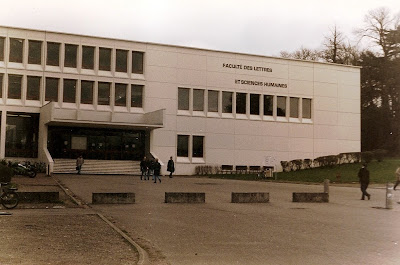
The University


Tomei o TGV, na Estação Montparnasse, em Paris. Era o dia 10 de janeiro de 1995. Havia nevado naqueles dias. Fazia muito frio. Cheguei às 19:30 na Estação de Nantes. Christian me aguardava com outras pessoas e fomos todos a um café em frente à estação para bebermos alguma coisa. Christian pediu um pastis. Pedi um igual. Ele me alertou que era uma bebida um pouco diferente, feito de anis. Eu disse que experimentaria, e no final acabei gostando e tomando em várias outras ocasiões com ele. Foi assim que o conheci. Em meu primeiro dia de Nantes, sempre me explicando as coisas da França.
Só consegui ir fazer um curso na universidade local porque essa boa alma se dispôs a me acolher, por mais de 40 dias, em sua casa. O responsável pelas bolsas já tinha esgotado as possibilidades de hospedagem junto aos estudantes locais de letras-português com as cinco estudantes brasileiras que me acompanhavam. Ao saber que faltava uma hospedagem, se voluntariou, e acabei sendo chamado em cima da hora para viajar.

Não tirei fotos da estação de trem. Nem quando cheguei, nem nos dias seguintes ou das vezes que voltei. Deveria ter feito isso, porque da minha cama escutava, tarde da noite e no começo da manhã, o último e o primeiro trem que passava. Christian morava a apenas uma quadra da linha de trem.

Havia um quarto só para mim. Grande, e com uma vista para a rua Coulmiers. Da janela eu via o restaurante Le Havane, onde nunca fiz uma refeição, e a lavanderia, onde ia lavar as roupas. O tempo em Nantes porém esteve sempre chuvoso durante aquele inverno e a paisagem na janela não era animadora.

Eu conheci Nantes com a assistência preciosa de um nativo. A cultura bretã, a antiga luta pela independência da Bretanha, os prazeres da gastronomia e da vinicultura local, e a própria França em si e sua música. Tive a oportunidade de conhecer os pormenores e os segredos da cidade de uma forma profunda. Christian nasceu e viveu sempre ali. Foi à universidade em Rennes e tinha muito conhecimento sobre os assuntos que me interessavam.
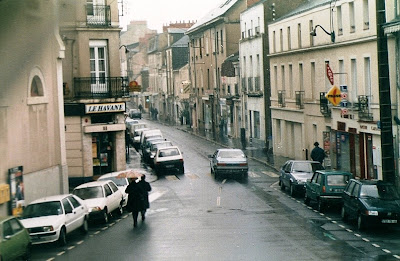
Rue de Coumiers


Après dix jours à Paris, en flânand autour de la ville, j´ai finalement pris le TGV pour Nantes. C´était le 10 janvier, 1995. En novembre de 1994 je pensais que je ne viendrais plus à l´Europe. Il n´y avait plus de place pour que je puisse rester à Nantes pour suivre un cours à l´université. Mais c´était à cause de la générosité de Christian que j´était là, avec des cinq autres copines pour étudier un mois à l´Université de Nantes.
Et il était là alors, en m´attendant à la Gare, avec Saulo e d´autres gens, qui recevait aussi des étudiants du Brésil. Je lisais a propos de la France. Je lisais et écoutait a propos de la culture bretagne. Mais c´etais Christian, qui m´a offert la vision locale sur tout ce que interessais a moi dans ces jours là. C´était un vrai privilège de rester chez lui.
Dans mon lit je écoutait le dernier train de la nuit et le premier du matin. Christian habitait à côté de la gare. Je prendais le tramway pour aller à la faculté des lettres. La voix du conducteur du tramway repercute encore dans mes oreilles: Manufacture, Gare SNCF, Duchesse Anne, Bouffay. Et alors je changai de ligne, a la rue du Commerce, et prennai la ligne rouge vers la Faculté. C´était un temps de plain satisfaction.

segunda-feira, 12 de julho de 2010

Santana do Parnaíba


Santana do Parnaíba is a historical town, located 30 minutes from the Capital City of São Paulo, and it preserves a great part of its old building from the colonial period. The first pioneers arrived at the place, on the banks of the Tietê River around 1561. The city has a beautiful church. The Matriz de Santana, rebuilt in 1610 in barroque style, emerges from the downtown area in a hill surrounded by historical building and a nice square, with bars and restaurants.


On the month of june, during Corpus Christi, a traditional catholic hollyday in Brazil , people wake up in the dawn to decorate the streets with sawdust and coffee sludge that represents the via crucis, Jesus last walk to the cross. After the church service in the afternoon, people leave the church and go in procession, carrying Jesus´ Image, through the decorated streets, and then back to the Square.


The locals put their religious images and crafts by the window to celebrate the procession.

terça-feira, 20 de abril de 2010

Paranapiacaba


Paranapiacaba is a small town located in the mountains between the Coast and the Plateau of the City of São Paulo. The first buildings in town were raised in 1860 to house the workers who built the railway that ran from São Paulo City to the Port of Santos, to transport the coffee production that was then being increased in the countryside of the State. One of the employees of the São Paulo Railway Company, an english man called Charles Miller, organized in this town, in those years, the first soccer game played in Brazil. Today, the town has become a touristic place and preserve some of the english accent around, including the amazing fog. Because of the fog we were not able to see the Tower Clock built after the one they´ve got in London.

domingo, 14 de março de 2010

Tupã


Tupã is my hometown. Located about 530 km west of the State Capital, the City of São Paulo, Tupã has a population of 60 thousand. I was born and grew up there. I first left it when I was 17 and went on a exchange student program in 1982, to the USA. Back home, I left it again to preparatory school for college, first to Londrina, State of Paraná, for just 2 months, and then to São Paulo, where I live since then, for 26 years now.


Part of my family still live in town, so I use to go back, at least once a year. In the past I would come home more often. After so many years living in São Paulo, I do feel it is my home now. But whenever I come back to Tupã, I still feel myself at home too.


This last time I was in Tupã, I visited two places especifically to take pictures. The first is a new place. It´s the square built in 2008 in tribute to the 100 years of the japanese immigration to Brazil. There is a large japanese community in town, as well as a portuguese and spanish communities.


The second place is a very old one. The old railway station, now abandoned, and waiting to be transformed soon in a museum. It reminds me of the good old times when we traveled by train, and the economy was on growth and commodities were transported by trains.

segunda-feira, 25 de janeiro de 2010

São Paulo


One of the things I like the most about São Paulo are these small bars or cafes around the city, sometimes completely out of the commercial areas, that offer nice small food. I like particularly those run by immigrants bringing delicious things from abroad.
I´ve just found this "Caminito" establishment where we can eat Argentineans Empanadas and drink a nice wine or a coffee, near home at the Planalto Paulista District.

domingo, 10 de janeiro de 2010

São Luiz do Paraitinga

The rainny season of 2009 - 2010 brought many tragedies in the southeastern states of Brazil. Dozens of deaths in Rio de Janeiro State, just like it happened in the same period one year ago in the southern state of Santa Catarina, for the same reason, as it has happened, unfortunately, often.
São Luiz do Paraitinga, a town located in the hills of the Coast of São Paulo State, was almost completely destroyed by the rain, thunderstorm and flood on January 1st. It is a historical town that preserved a past of splendour from the coffee culture in the 19th century. Preliminary studies shows that 80% of the houses and constructions protected by the Historical Society came down. It seems to have 400 buildings that were protected because its architectural value. More than 300 probably don´t exist anymore or are enough damaged.

We visited the city in a hot and sunny day of December of 2005. I didn´t take a picture of the Main Church (180 years old) at the Central Square, because it didn´t fit in my camera´s angle. I didn´t take many pictures around town either, because I thought the city would always be there to be pictured. And now most of it is completely destroyed.


We walked all over the place in that ocasion, and saw the little girls, dressed up (The "pastorinhas" or "little sheperd girls"), keeping an old catholic tradition of singing while walking through the streets in order to visit the crèches (nativity scenes) that the families prepared in their living rooms. The people kept their doors opened and the girls would come in to see the crèches and pray. Some hostess served coffee and breads. We were invited (every one is) to come inside two houses to see the scene. It´s something we don´t find anymore in modern Brazil.


I walked endlessly until I found the house where lived, when children, the great Brazilian Geographer Aziz Ab Saber and his sister Nidia, also a professor at the University of São Paulo, who was a teacher of mine and a friend.


All we wonder now is how the city is going to come out of this tragic flood of the Paraitinga River.